
Introduction
municipal water supply, and commercial water treatment systems. Excess iron and manganese in groundwater can cause reddish-brown stains, metallic taste, unpleasant odors, clogged pipelines, scaling, and damage to filtration equipment. To solve these challenges efficiently,
Water quality plays a vital role in industrial operations
MNO2 Iron Removal Filter Media (Manganese Dioxide) has become one of the most trusted filtration solutions used worldwide.
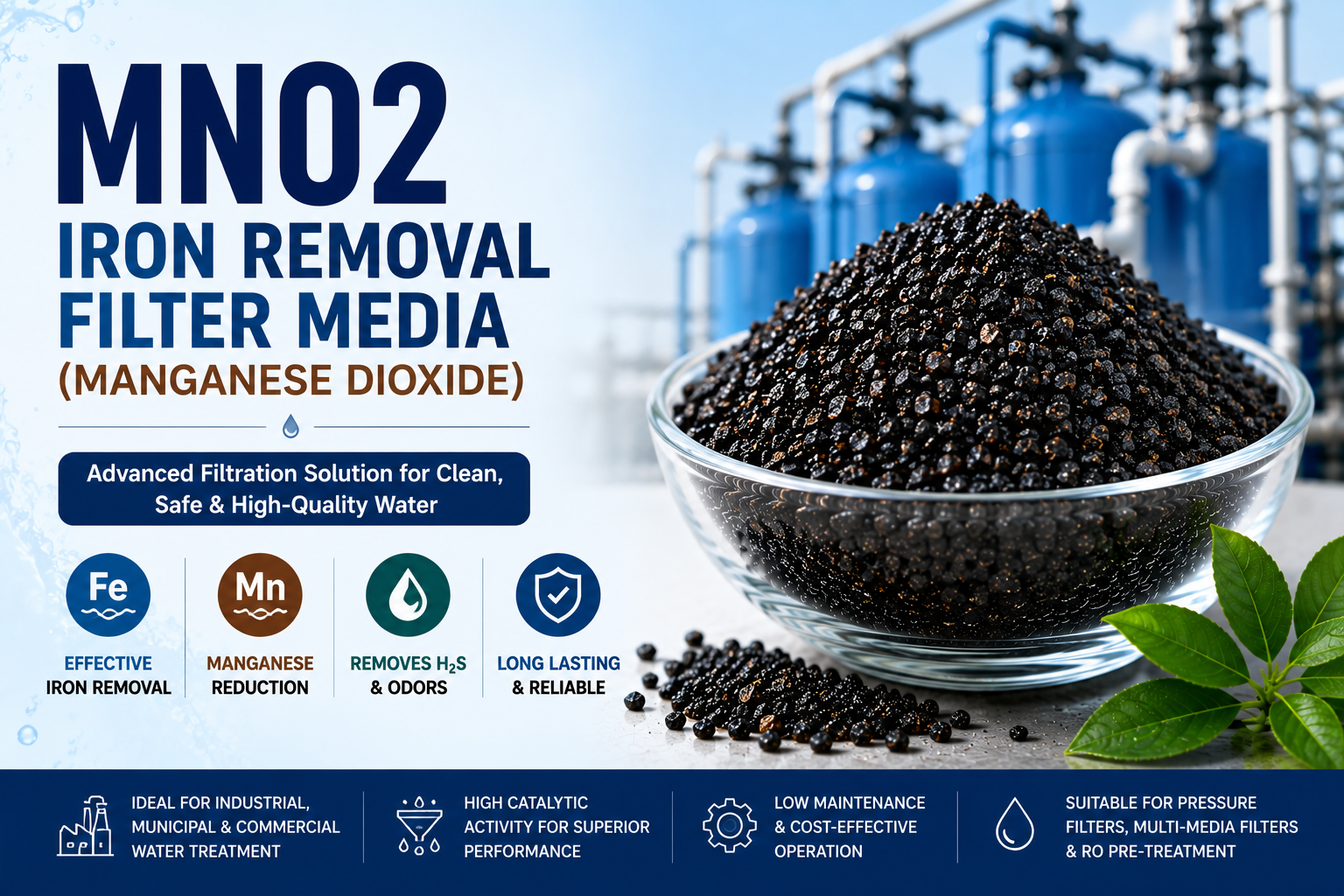
MNO2 Iron Removal Filter Media is specially designed to remove dissolved iron, manganese, and hydrogen sulfide through catalytic oxidation and filtration. It improves water clarity, protects downstream equipment, and extends the life of filtration systems, making it a preferred choice for modern water treatment plants.
What is MNO2 Iron Removal Filter Media?
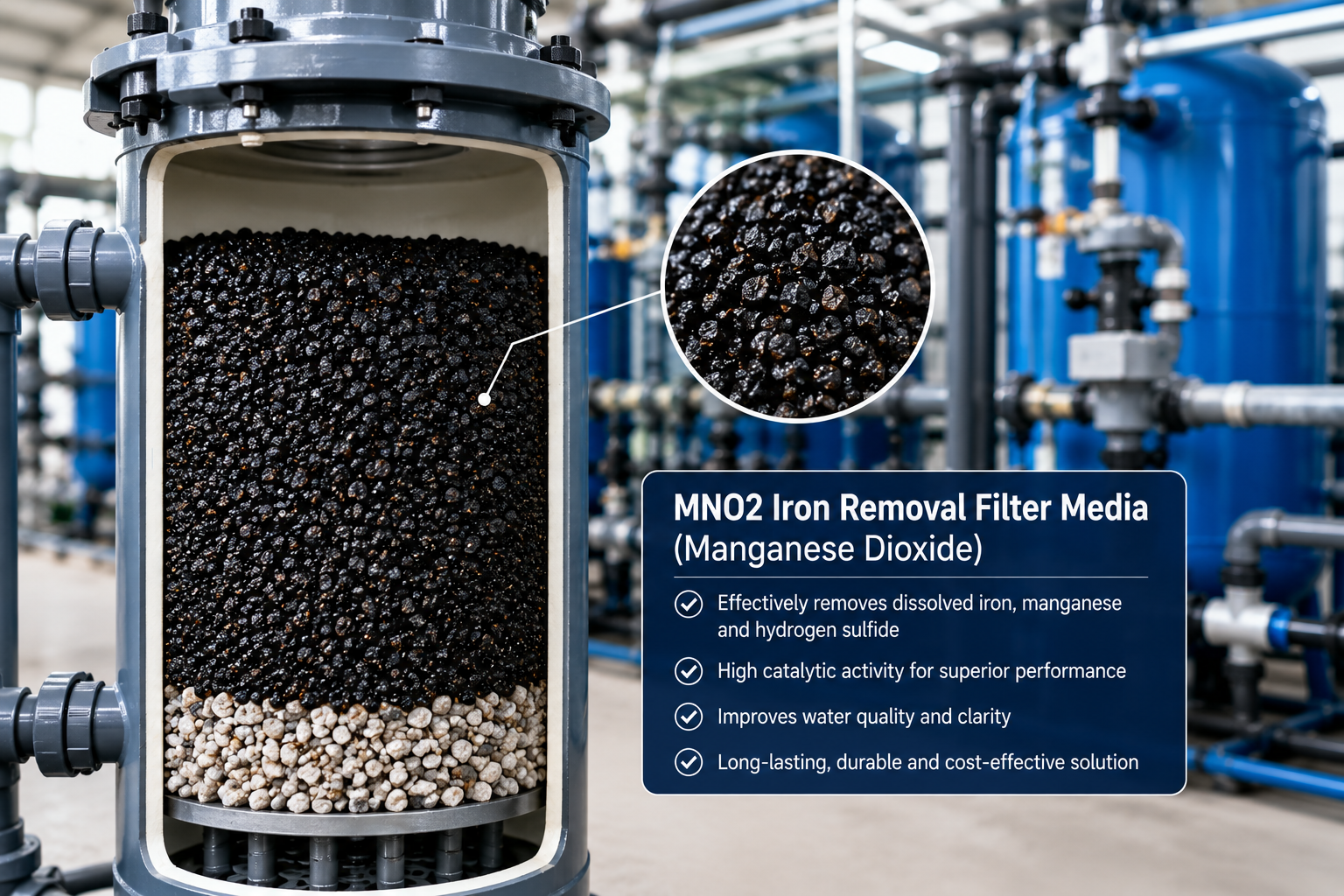
MNO2 Iron Removal Filter Media is a filtration material containing a high concentration of manganese dioxide. It acts as a catalyst that accelerates the oxidation of dissolved iron and manganese into insoluble particles, allowing them to be removed efficiently through filtration.
This media is widely used in pressure filters, groundwater treatment systems, municipal water treatment plants, and industrial filtration applications where consistent water quality is required.
How Does Manganese Dioxide Filter Media Work?
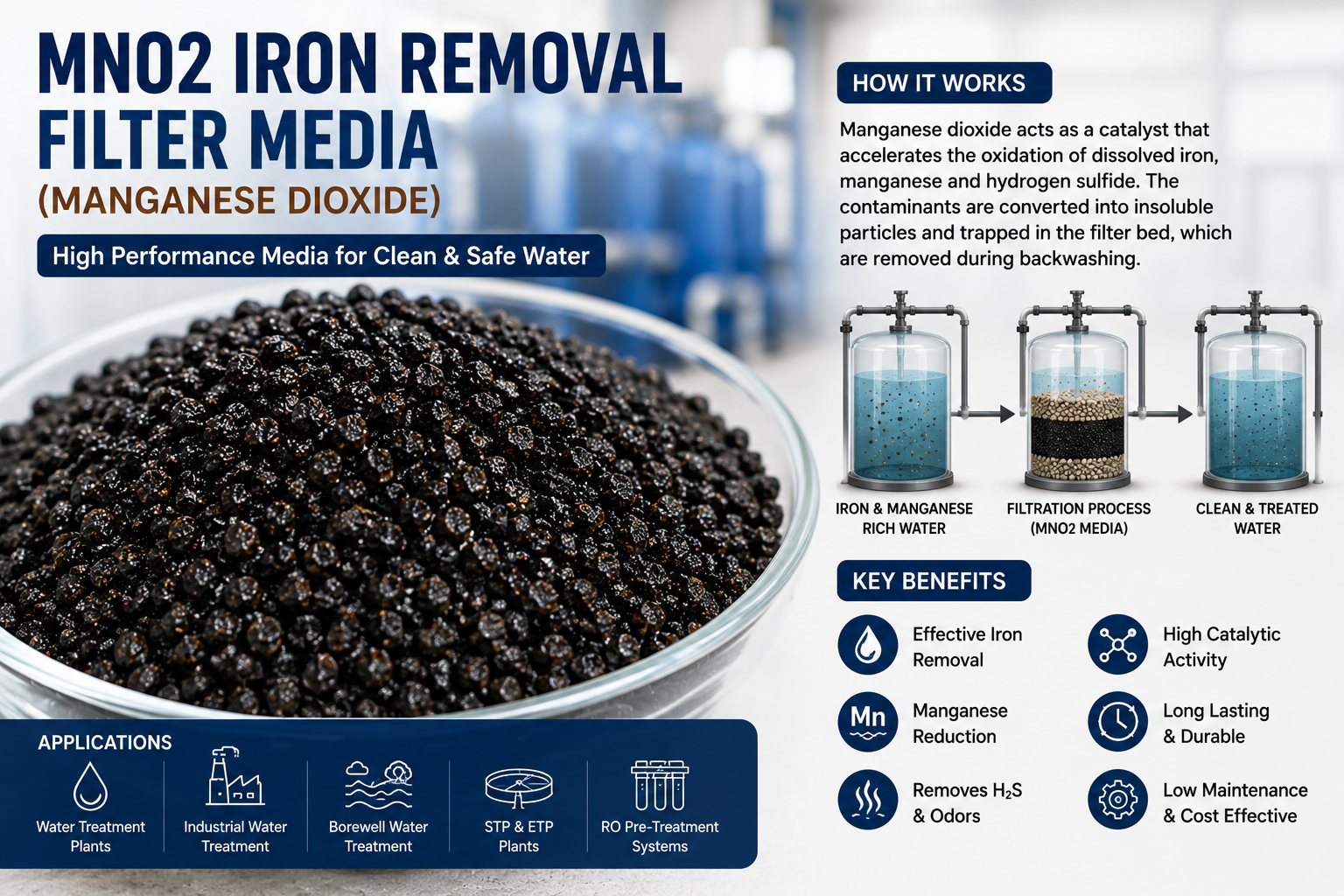
When iron-rich or manganese-rich water passes through the filter bed, the manganese dioxide coating promotes rapid oxidation. The dissolved contaminants are converted into solid particles that remain trapped within the filter media. During backwashing, these particles are flushed out, restoring the filtration system’s efficiency.
This process improves water quality without introducing unnecessary complexity into the treatment system.
Key Features of MNO2 Iron Removal Filter Media
- High manganese dioxide content
- Excellent catalytic oxidation performance
- Efficient iron and manganese removal
- Removes hydrogen sulfide and unpleasant odors
- Long operational life
- High mechanical strength
- Suitable for pressure and gravity filters
- Low maintenance requirements
- Consistent filtration efficiency
- Ideal for industrial and municipal applications
Applications of MNO2 Iron Removal Filter Media
Groundwater Treatment
Groundwater often contains elevated levels of iron and manganese. Manganese Dioxide Filter Media effectively removes these contaminants, making water suitable for domestic and industrial use.
Drinking Water Treatment Plants
Municipal water treatment facilities use MNO2 Iron Removal Filter Media to improve water quality and meet drinking water standards.
Industrial Water Treatment
Industries including pharmaceuticals, food processing, chemicals, textiles, power generation, and manufacturing rely on this filtration media for process water purification.
STP & ETP Plants
Sewage Treatment Plants (STP) and Effluent Treatment Plants (ETP) use Manganese Dioxide Filter Media to improve filtration efficiency and protect downstream treatment processes.
RO Pre-Treatment Systems
Installing MNO2 Iron Removal Filter Media before reverse osmosis systems helps reduce membrane fouling and extends membrane life.
Benefits of Manganese Dioxide Filter Media
Efficient Iron Removal
Quickly removes dissolved iron that causes discoloration, stains, and metallic taste.
Effective Manganese Reduction
Reduces manganese levels responsible for black stains and water quality issues.
Hydrogen Sulfide Removal
Helps eliminate sulfur odors commonly found in groundwater supplies.
Longer Equipment Life
Protects pumps, pipelines, RO membranes, valves, and treatment equipment from iron deposits.
Cost-Effective Operation
Lower maintenance requirements and long media life reduce operational costs.
Industries That Use MNO2 Iron Removal Filter Media
- Municipal Water Treatment
- Borewell Water Treatment
- Industrial Water Treatment
- Pharmaceutical Industry
- Food & Beverage Industry
- Hotels & Resorts
- Hospitals
- Commercial Buildings
- Chemical Plants
- Textile Industry
- Manufacturing Facilities
- Power Plants
MNO2 Iron Removal Filter Media vs Ordinary Filter Media
| Feature | MNO2 Filter Media | Conventional Media |
|---|---|---|
| Iron Removal | Excellent | Moderate |
| Manganese Removal | Excellent | Limited |
| Hydrogen Sulfide Removal | Yes | Limited |
| Catalytic Activity | High | Low |
| Service Life | Long | Moderate |
| Industrial Performance | Superior | Standard |
Why Choose Babji Filtrations?
Babji Filtrations supplies premium-quality MNO2 Iron Removal Filter Media for industrial, commercial, and municipal water treatment applications. Every batch is manufactured to maintain consistent quality, reliable performance, and long operational life.
We also provide complete filtration solutions including Activated Carbon Filter Media, Anthracite Filter Media, Quartz Silica Sand Filter Media, Glass Filter Media, and Filter Gravel Media for multi-media filtration systems.
Frequently Asked Questions
What is MNO2 Iron Removal Filter Media used for?
It is used to remove dissolved iron, manganese, and hydrogen sulfide from groundwater and industrial water treatment systems.
Is Manganese Dioxide Filter Media suitable for borewell water?
Yes. It is one of the most effective filtration media for treating borewell water with high iron and manganese content.
Can it be used before RO systems?
Yes. It is commonly installed before reverse osmosis systems to protect RO membranes from iron fouling.
Which industries use MNO2 Iron Removal Filter Media?
Water treatment plants, STP, ETP, food processing, pharmaceuticals, chemical plants, manufacturing industries, and municipal water utilities.
Conclusion
MNO2 Iron Removal Filter Media (Manganese Dioxide) is a reliable solution for removing iron, manganese, and hydrogen sulfide from groundwater and industrial water supplies. Its high catalytic efficiency, long service life, and compatibility with multi-media filtration systems make it one of the most effective filter media for modern water treatment applications.
For industries looking for high-performance filtration media, MNO2 Iron Removal Filter Media offers consistent results, reduced maintenance costs, and improved water quality.