
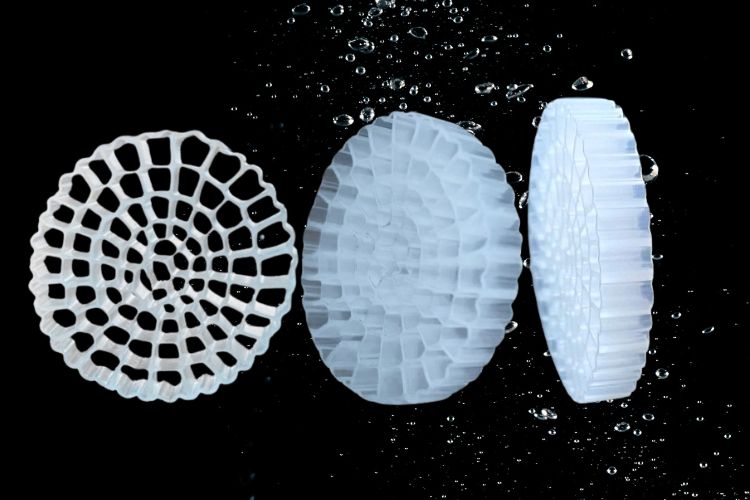
MBBR Fab Media (Moving Bio Bed Reactors)
MBBR (Moving Bed Biofilm Reactor) is an advanced biological wastewater treatment technology that works on the biofilm process. While it is based on the principles of the Activated Sludge Process (ASP), the key difference lies in the addition of specialized carrier media within the aeration tank. These floating media provide a large surface area for the growth of microorganisms, which enhances the biological treatment efficiency. As a result, MBBR systems can support a much higher concentration of microbes within the same tank volume compared to conventional ASP systems, making them more compact and efficient. MBBR technology is widely used for domestic sewage treatment, industrial effluent treatment, and wastewater recycling. It is especially effective for applications where space is limited or where existing plants need to be retrofitted to handle increased loads. By simply adding MBBR media into existing aeration tanks, the treatment capacity can be significantly increased without the need for major civil modifications. The system requires diffused aeration, which ensures proper mixing of media and optimal oxygen transfer for microbial growth. MBBR technology also provides advantages such as low sludge generation, stable process performance, high shock load resistance, and reduced footprint. Closely related to MBBR is the Fluidized Aerobic Biofilm (FAB) technology, which works on similar principles. However, in FAB systems, the media are kept stationary and fluidized in the aeration tank instead of being in continuous suspension. Both technologies are widely adopted in modern wastewater treatment plants for their efficiency, adaptability, and cost-effectiveness.
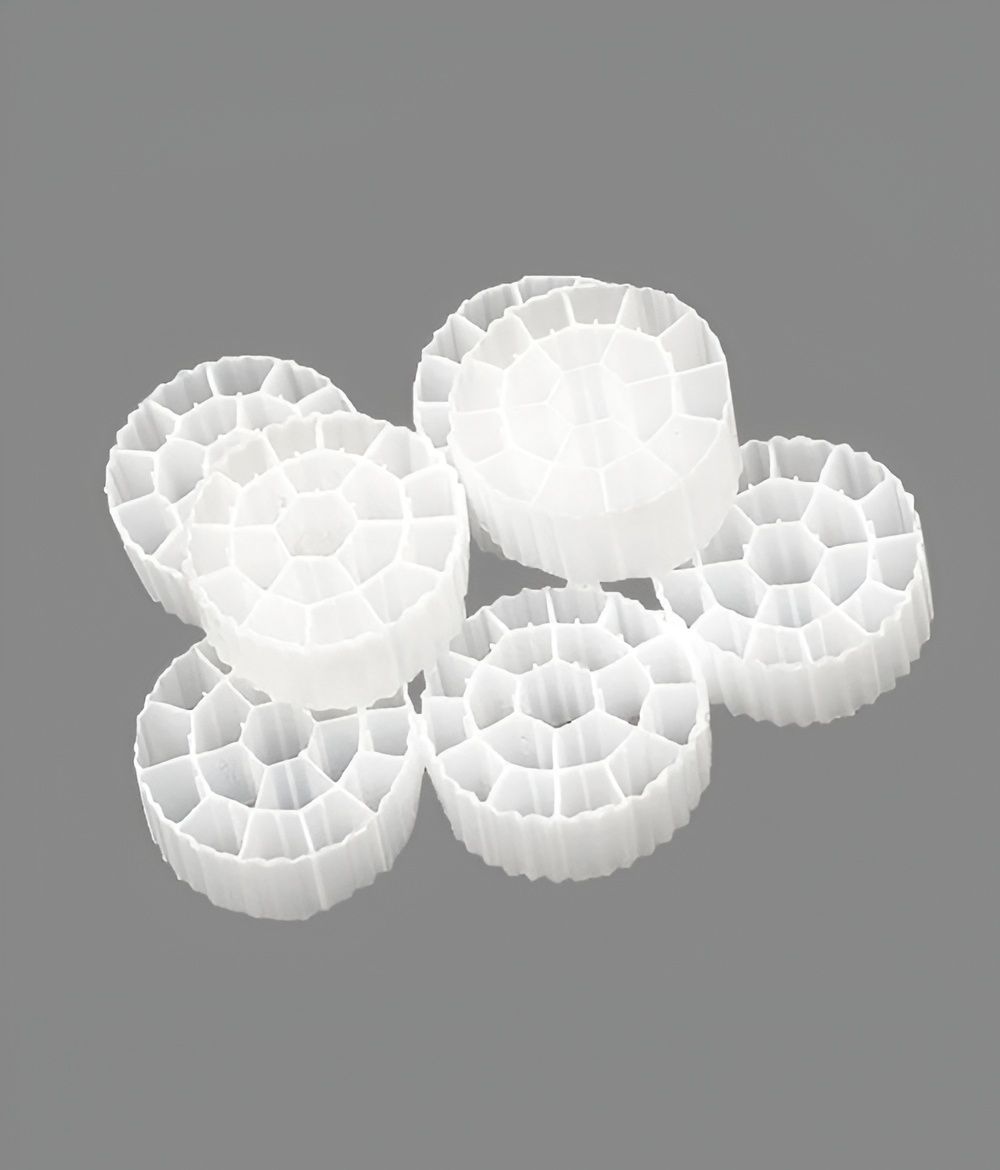
Applications of MBBR Fab Media (Moving Bio Bed Reactors)
MBBR technology is widely used across multiple sectors due to its efficiency, flexibility, and ability to handle variable loads. In the municipal sector, MBBR systems are deployed for domestic sewage treatment, wastewater recycling, and upgrading old treatment plants to meet stricter discharge norms. In the industrial sector, it is extensively applied in textiles, pharmaceuticals, food and beverage, pulp and paper, tanneries, petrochemicals, and chemical industries, where high organic loads and variable effluent characteristics are common. The technology is also preferred in residential complexes, hotels, hospitals, and commercial buildings for decentralized wastewater treatment. MBBR systems are highly suitable for both new installations and retrofits, making them a cost-effective and space-saving choice for industries and municipalities aiming to achieve sustainable water management and regulatory compliance.

Applications Of MBBR Fab Media (Moving Bio Bed Reactors)
- Compact design with smaller footprint compared to conventional systems.
- High treatment efficiency due to large surface area carrier media.
- Low sludge generation, reducing disposal and handling costs.
- Energy-efficient with optimized diffused aeration system.
- Stable performance even under shock loads and fluctuating flow conditions.
- Easy retrofitting into existing wastewater treatment plants.
- Low maintenance requirements with long-lasting durability.
- Cost-effective solution for both municipal and industrial applications.
| (MBBR MEDIA, BIO PAC MEDIA, (FAB MEDIA) | |
|---|---|
| Types of media | MBBR, BIO, PAC, (FAB MEDIA) |
| MOC of Media | POLYPROPYLENE (PP) |
| Specific Gravity/Dencity 0.93 | 0.93 |
| Shape | CYLINDRICAL |
| Height | 12MM |
| Diametrer | 22MM |
| Surface Area (M2) | 400-425 (M2) |
| Colour | BLACK |
| Thickness | 1.0MM |
| Max. Continuous working temp | 55C |